Trois Régions Viticoles
PART I: BURGUNDY
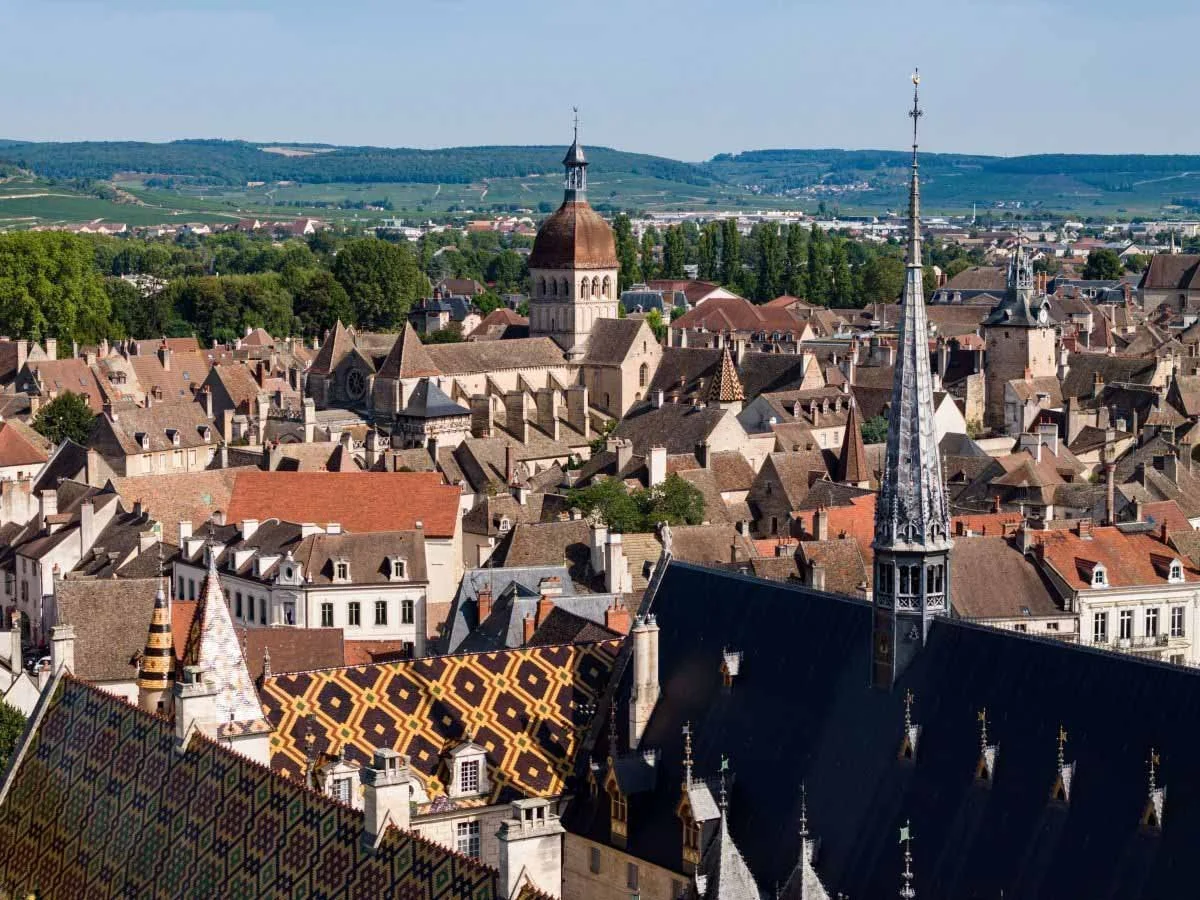
The village of Pommard sits about four kilometres south of Beaune, and at this point in the trip, you've probably already started to lose track of the names. There are a lot of appellations in Burgundy, a lot of Premiers Crus and Grands Crus, a lot of chalk and limestone and the kind of terroir-focused reverence that French winemakers deliver with total seriousness. It helps to arrive somewhere that puts all of it into focus.
Château La Commaraine has just opened, though its foundations date to 1112. The restoration took years, and the results are cleverly careful: a limited number of rooms in blond wood tones and pale gold light, most of them facing directly onto the vines. The Clos Monopole surrounds the property on nearly nine acres, cultivated biodynamically, and the winery has been built directly into the hotel. You walk through it to get from one end to the other. That's not a gimmick. It means that at most hours of the day, something is happening in there and you're standing close enough to ask about it.
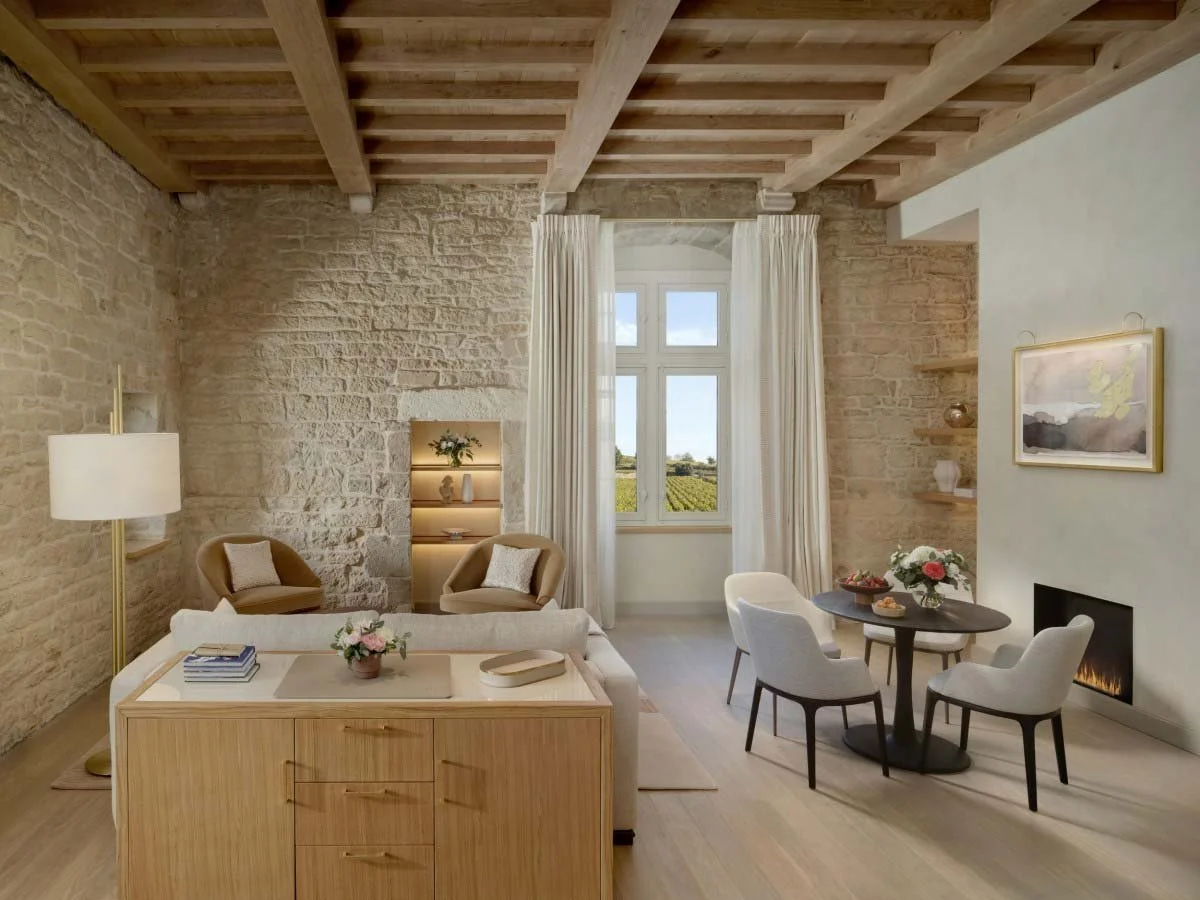
Christophe Raoux, who holds the title of Meilleur Ouvrier de France, oversees the two restaurants on property. Le Clos is the daily one, a bistro with the winery as a backdrop and a menu that leans into Burgundian classics without being reverent about it. Le VIII, the gastronomic restaurant beneath the ancient vaulted cellar, takes its name from the eight sub-plots of the Clos, identified by terroir specialist Pedro Parra. Each plate draws from the same logic as the wine: understand the soil, then express it. It's opening soon and worth timing a stay around.
A day in Beaune is worth doing, particularly the Hospices, which is both a medieval almshouse and the site of one of the most famous wine auctions in the world. Then head south, into Beaujolais. The landscape softens, the granite takes over from the limestone, and the wines shift register entirely. The villages up in the hills (Fleurie, Moulin-à-Vent, Morgon) are quieter and easier to move through. Stop wherever someone has a table outside with glasses already on it. That's usually a good sign.
Lyon is an hour south, and deserves at least a dinner. The city has a longer claim on French gastronomy than Paris and is slightly less concerned with telling you about it. The bouchons in the old city do Lyonnais classics like quenelles, andouillette, cervelle de canut…with a directness that matches the character of the place. A late evening here before driving back north is the right way to pace it.
PART II: BORDEAUX
The fork here is genuine, and the choice says something about what you're after.
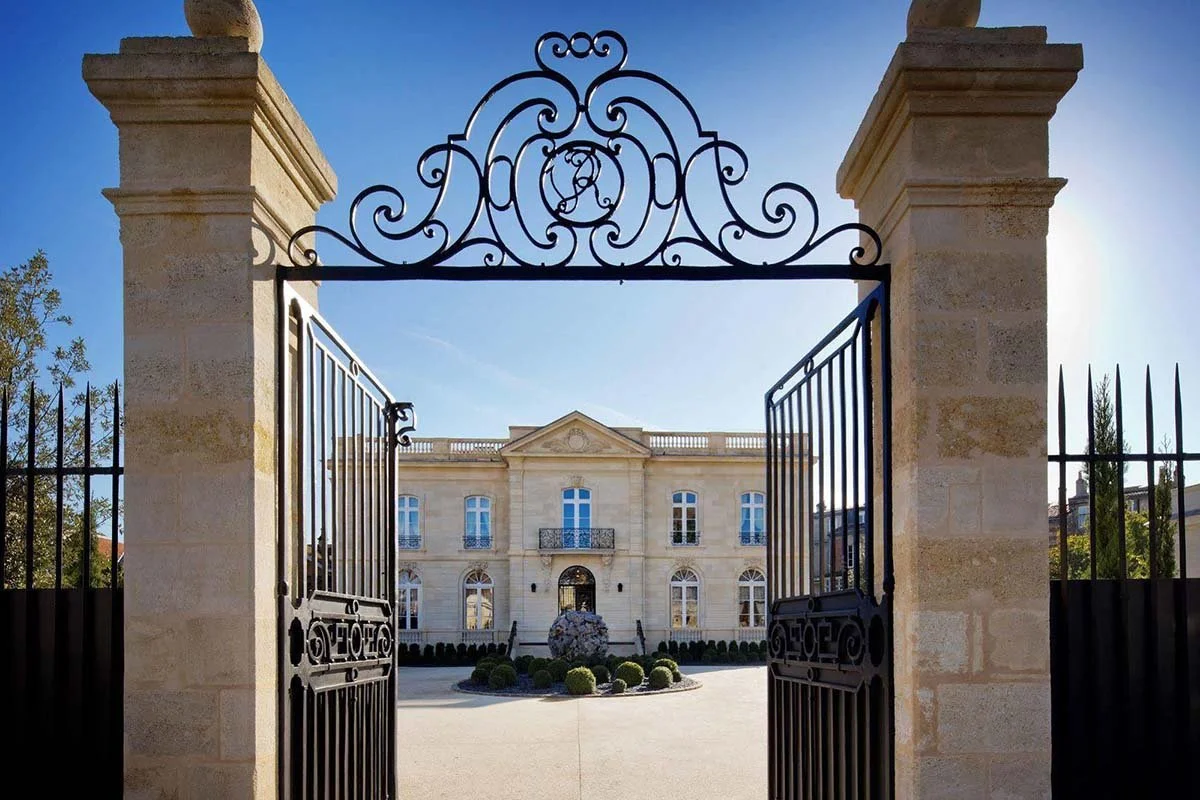
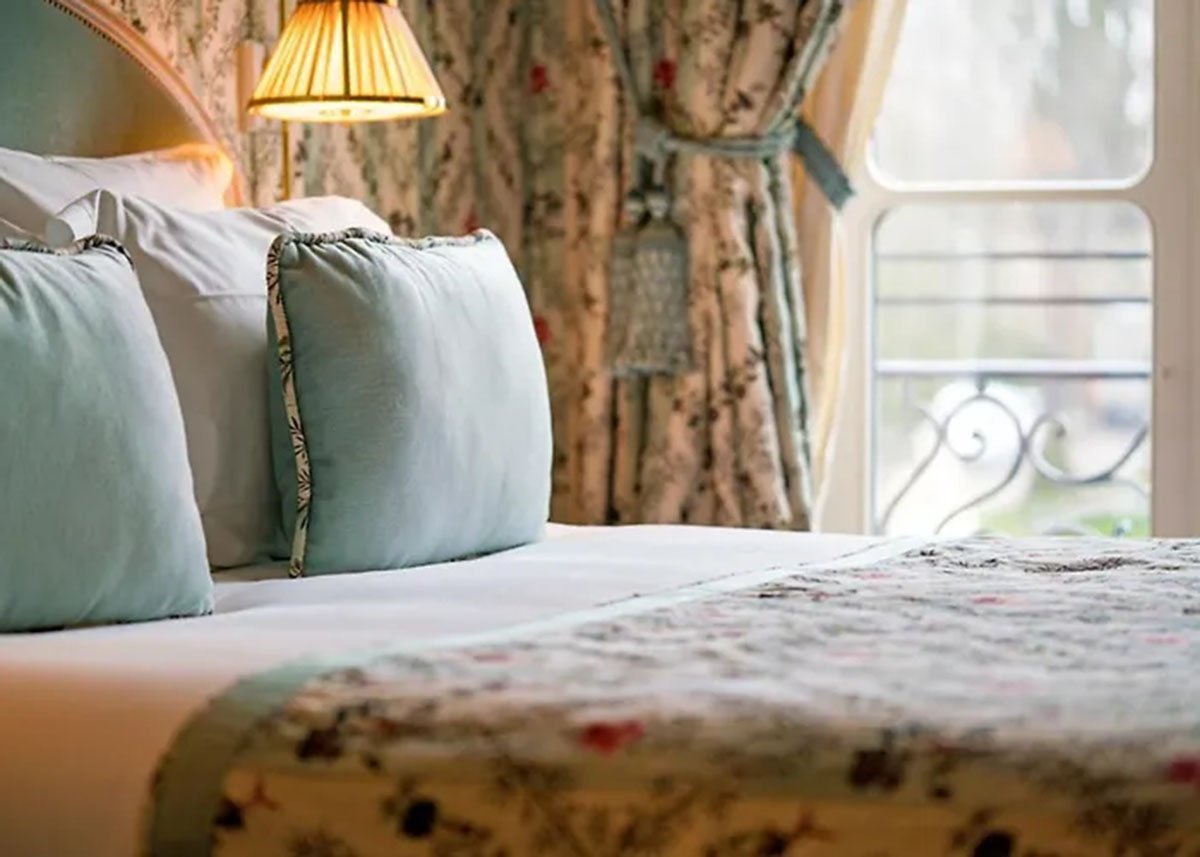
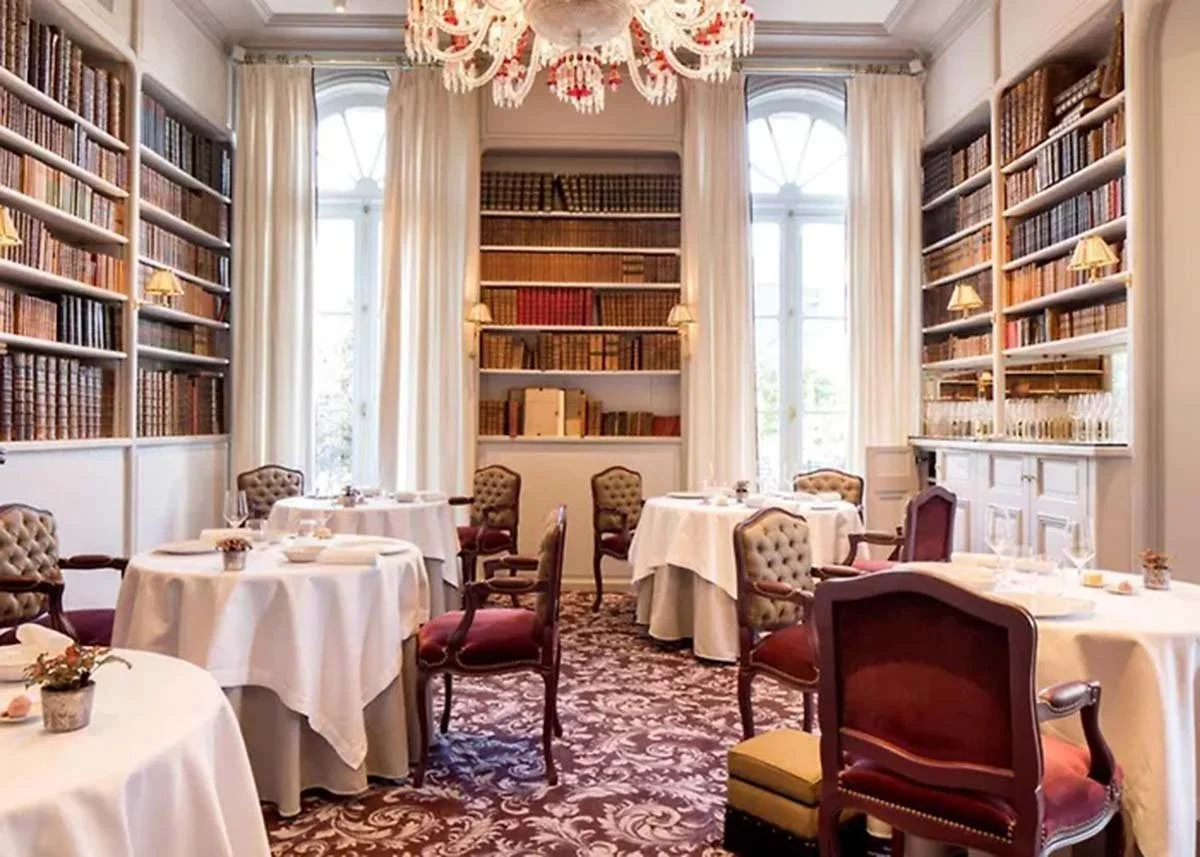
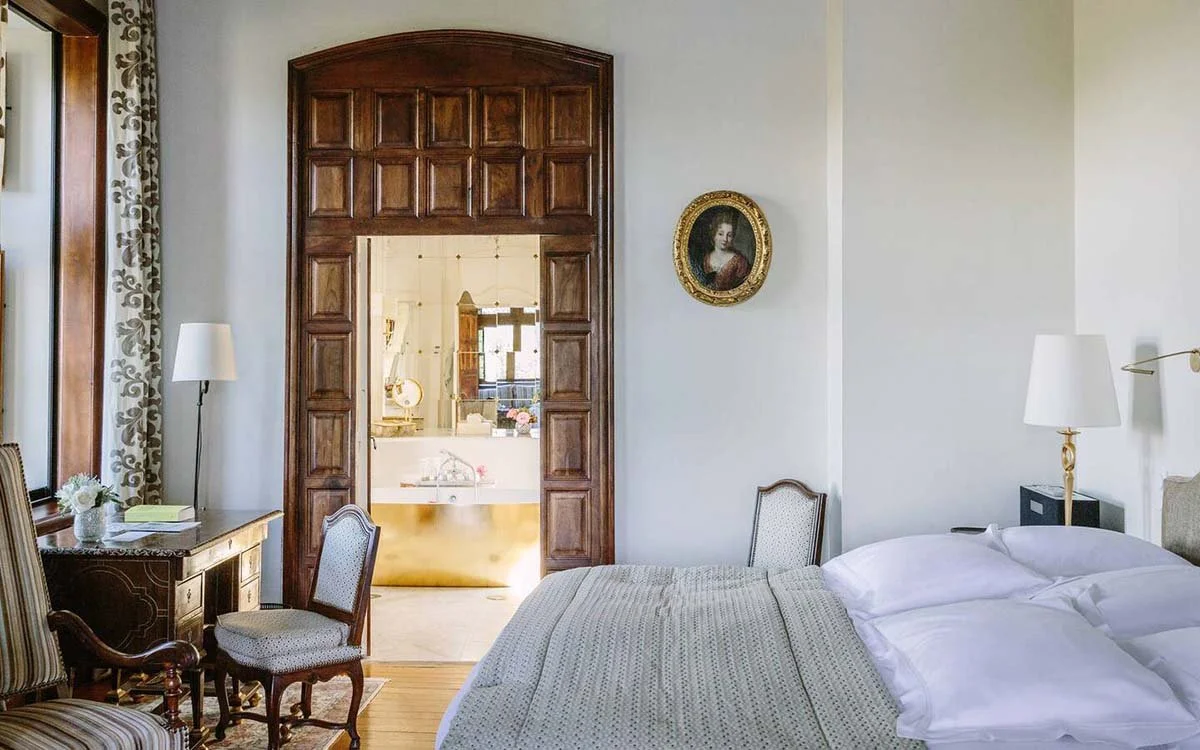
In the city, La Grande Maison de Bernard Magrez occupies a late 19th-century mansion on a quiet residential street near the Jardin Public. There are six rooms. Six. The restaurant, designed in collaboration with Pierre Gagnaire and run day-to-day by Jean-Denis Lebras, who spent more than a decade in Gagnaire's kitchens, is not open to the public. Bernard Magrez built this as a private space for his guests, which is exactly what it feels like. He owns four Grands Crus Classés estates in the region: Château Pape Clément in Graves, La Tour Carnet in the Haut-Médoc, Fombrauge in Saint-Émilion and Clos Haut Peyraguey in Sauternes. The wine menu carries all 259 references of the Crus Classés of Bordeaux, which is a staggering document to be handed at the start of a meal. Bordeaux the city has opened up considerably in recent years, with good restaurants and a dense, walkable centre, but La Grande Maison is its own argument for staying in.
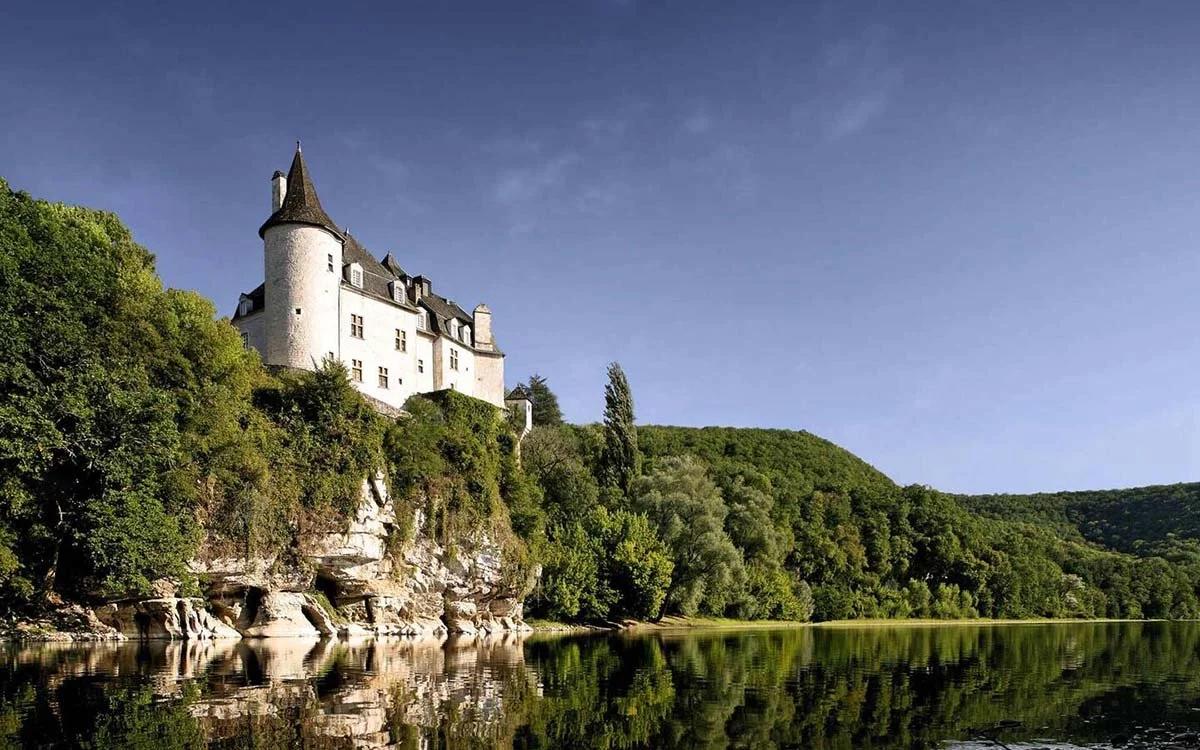
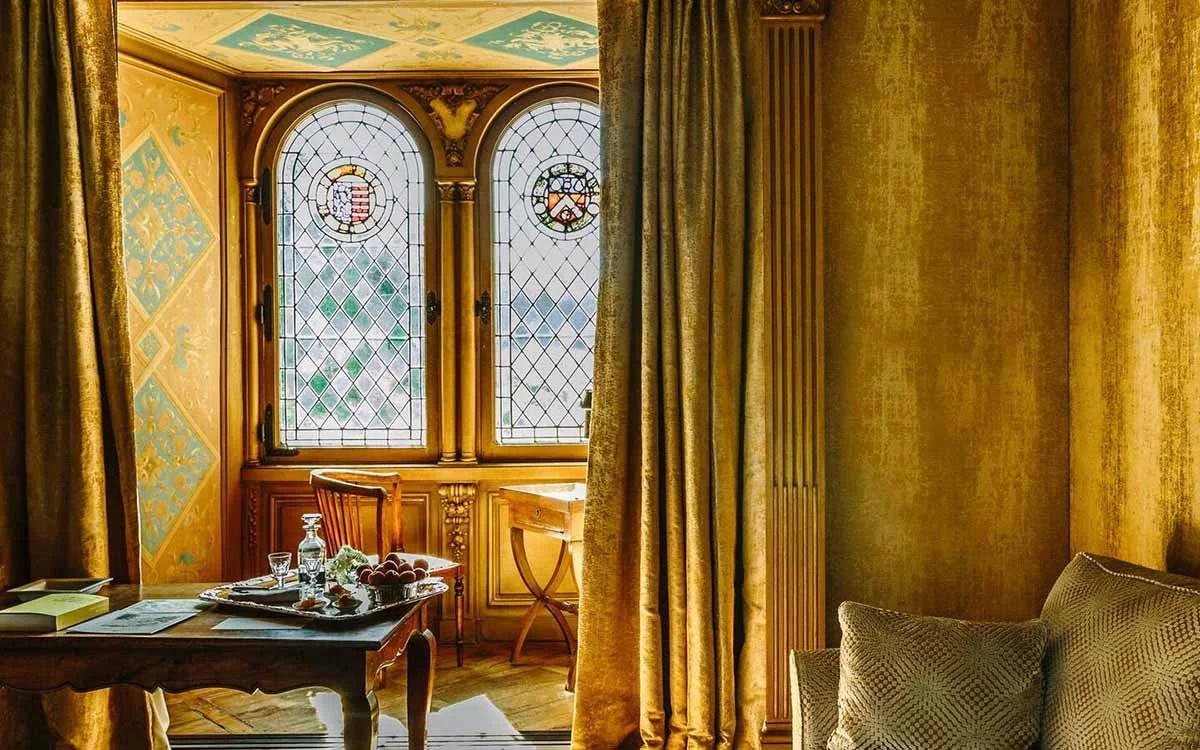
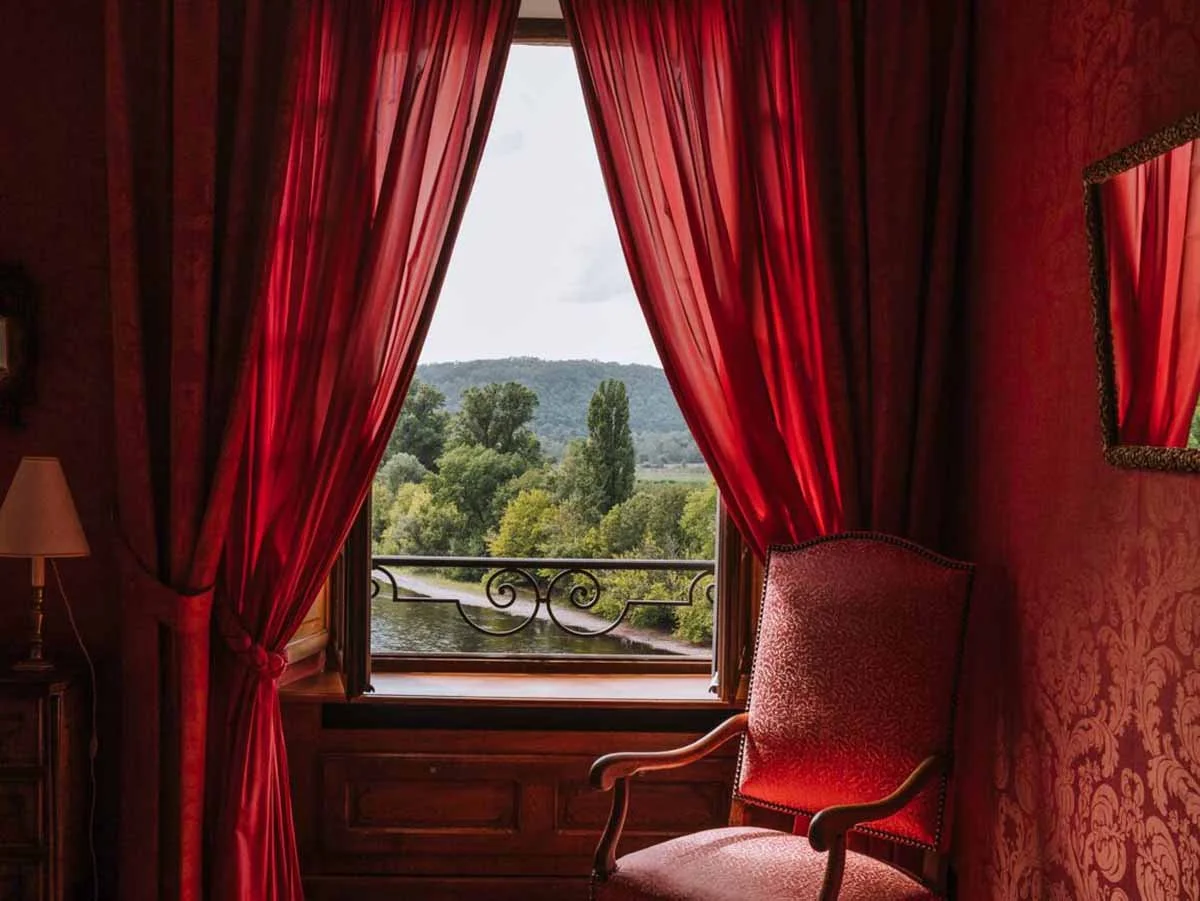
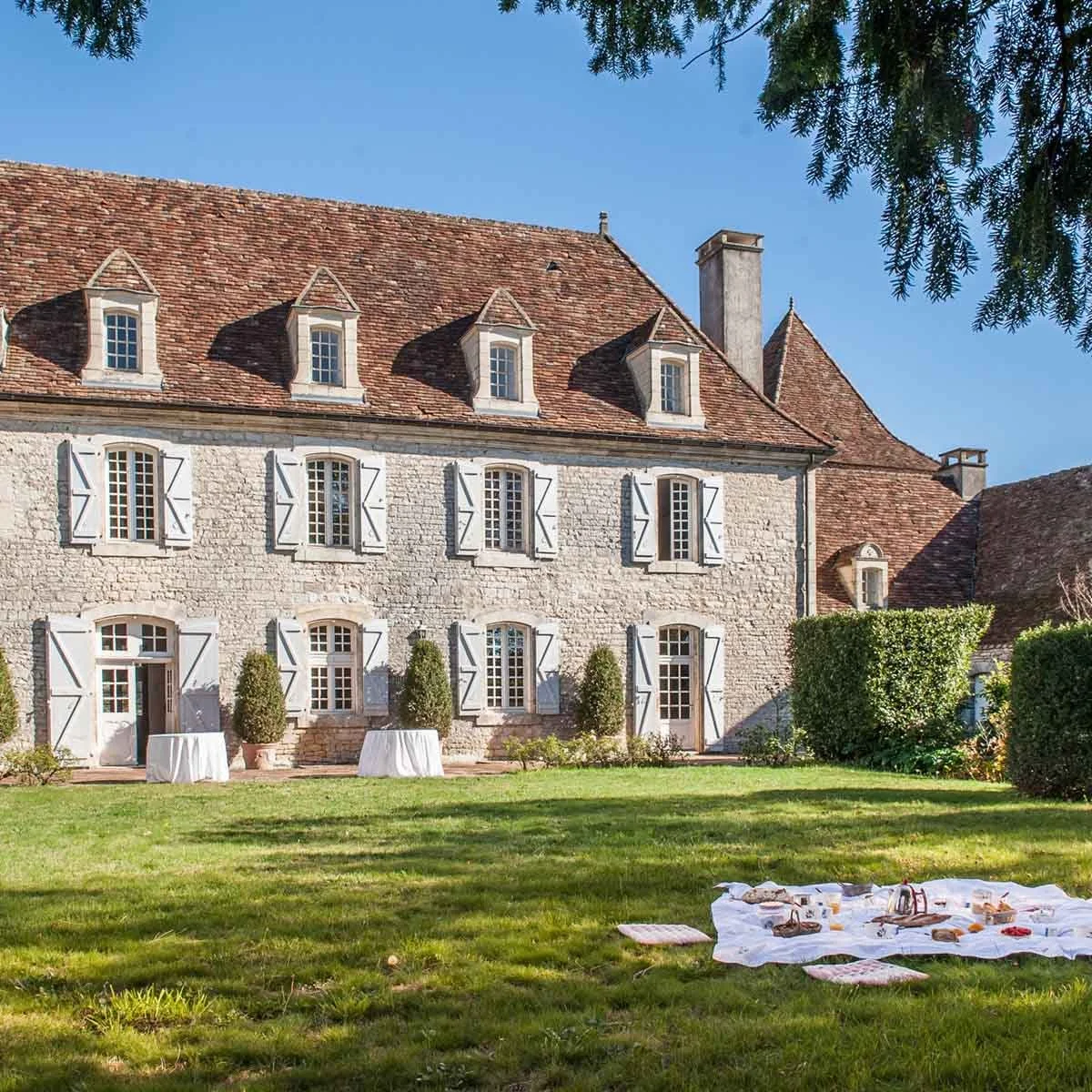
The country option requires a longer drive, southeast into the Lot and Dordogne. Château de la Treyne was built in 1342 and stands on a cliff above the river with its towers so close to the water they appear to float on it. Philippe and Stéphanie Gombert have run the property for over forty years, and it shows in the way the place carries itself: 18 rooms, all different, period furniture, massive stone walls, century-old cedars lining the formal garden. Chef Stéphane Andrieux has held a Michelin star here for years, working with produce from the estate's own kitchen garden, which comes with chickens and pigs, and from the surrounding Périgord. Dinner in the Louis XIII salon or on the terrace overlooking the Dordogne is the kind of meal that's very hard to recreate anywhere else. The 300-acre private forest wraps around the property, and the paths through it go on longer than you'd expect.
The two options don't easily combine into a single itinerary. That's fine. Choose based on whether you want the city's energy and one of the great Bordeaux wine lists, or a medieval château on a river with a kitchen that knows exactly where it is.
PART III: CHAMPAGNE
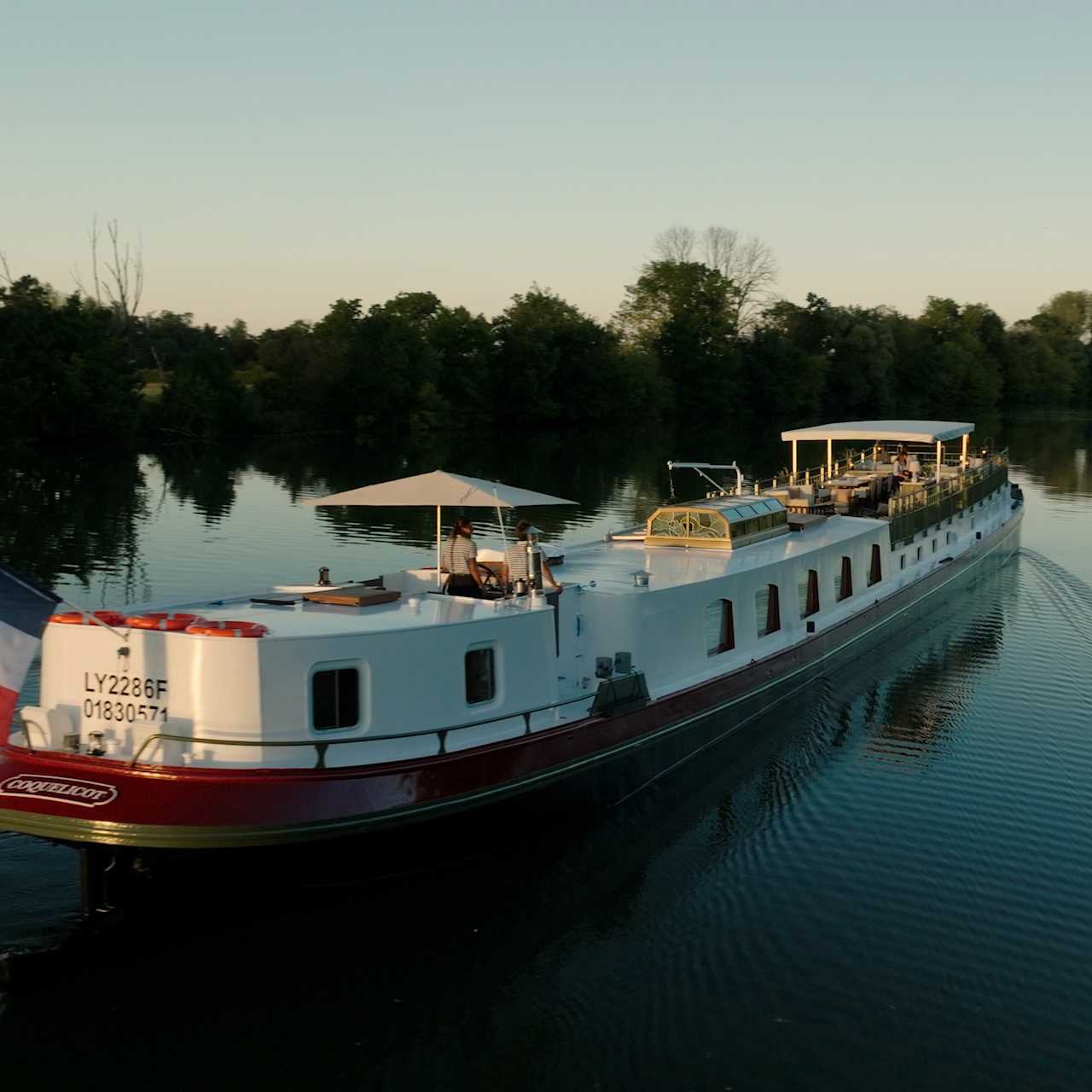
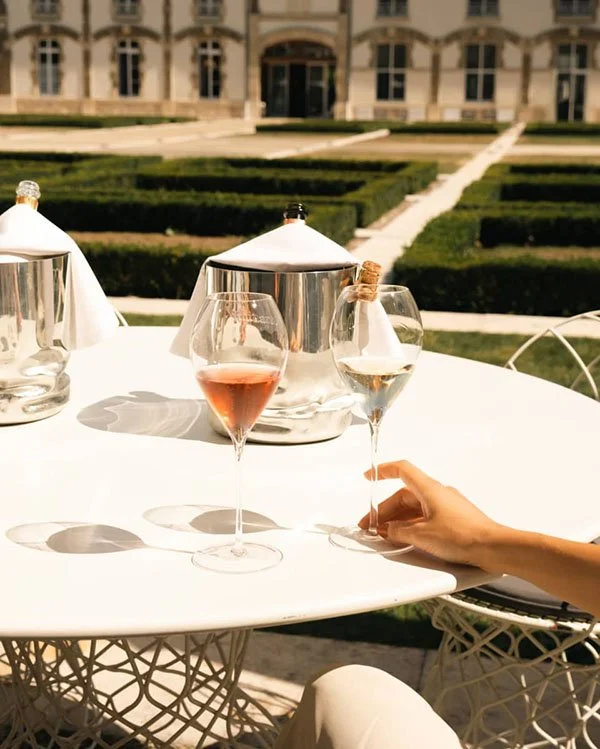
The Coquelicot is a Belmond boat, and it does something that most wine-region travel doesn't: it makes the getting-there part of the point. The private-charter barge moves through the canals and waterways of the Champagne region at the pace the Champagne region deserves, which is slow. The landscape through the picture window on the upper deck is not dramatic. Rolling hills, tended vines, sky. That turns out to be enough through all the bubbles in the glass.
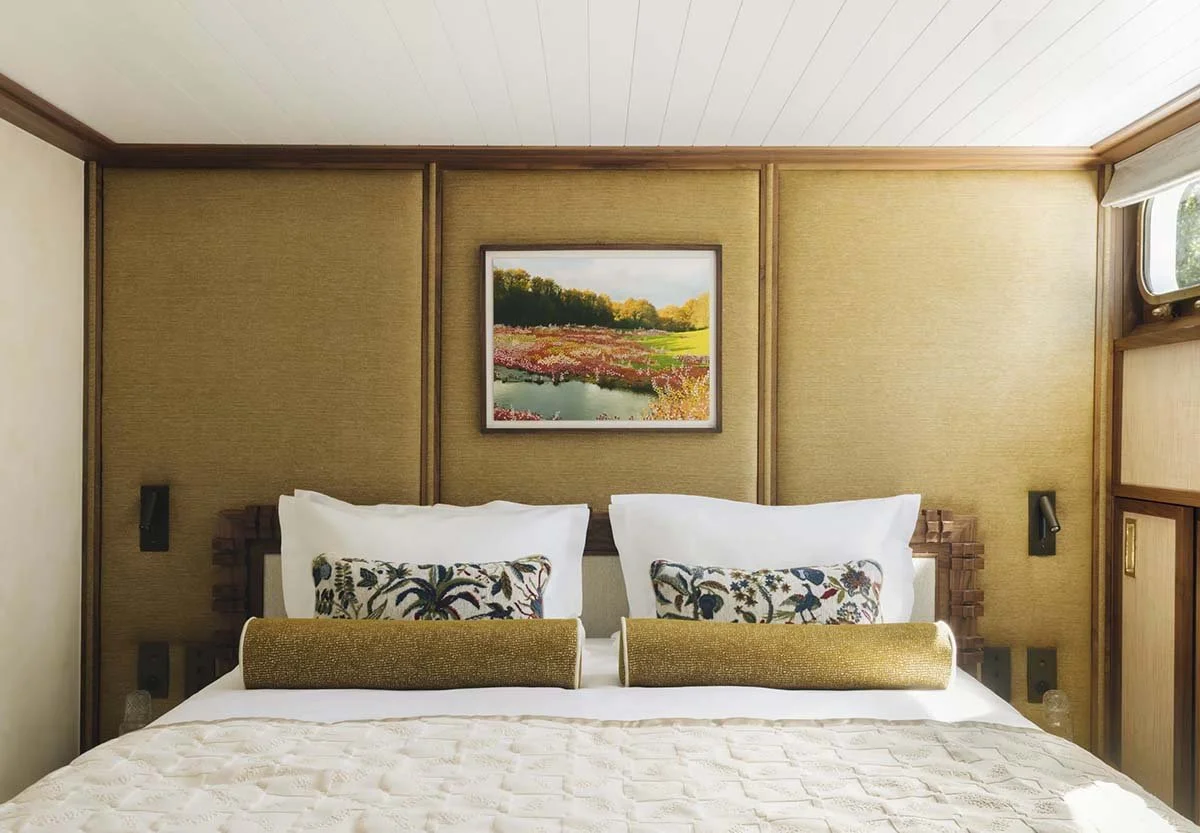
There are three cabins below deck, each with marble bathrooms, and an indoor dining area that works particularly well in the evening when the light outside has gone flat. The kitchen is open, which means you can watch the chef work with seasonal ingredients from the region, and the Champagne bar below is stocked by Ruinart. The service-to-passenger ratio on something this size means that things happen when you want them to, not on a schedule someone else decided before you arrived.
The base is Paris, which doesn't need much of a case made for it. A few days in the city before or after the boat makes sense. Champagne the region is roughly 90 minutes east of Paris and often bypassed in favor of the famous names visited on day trips from the capital. The houses of Reims and Épernay (Krug, Billecart-Salmon, Gosset) are easier to book than people expect, and a few hours in the chalk cellars beneath them, which run for miles, reframes what you're drinking when you get back on the boat that evening.
The rhythm of the Coquelicot is slow enough that by the second day, you stop tracking the itinerary. That's the right place to be.
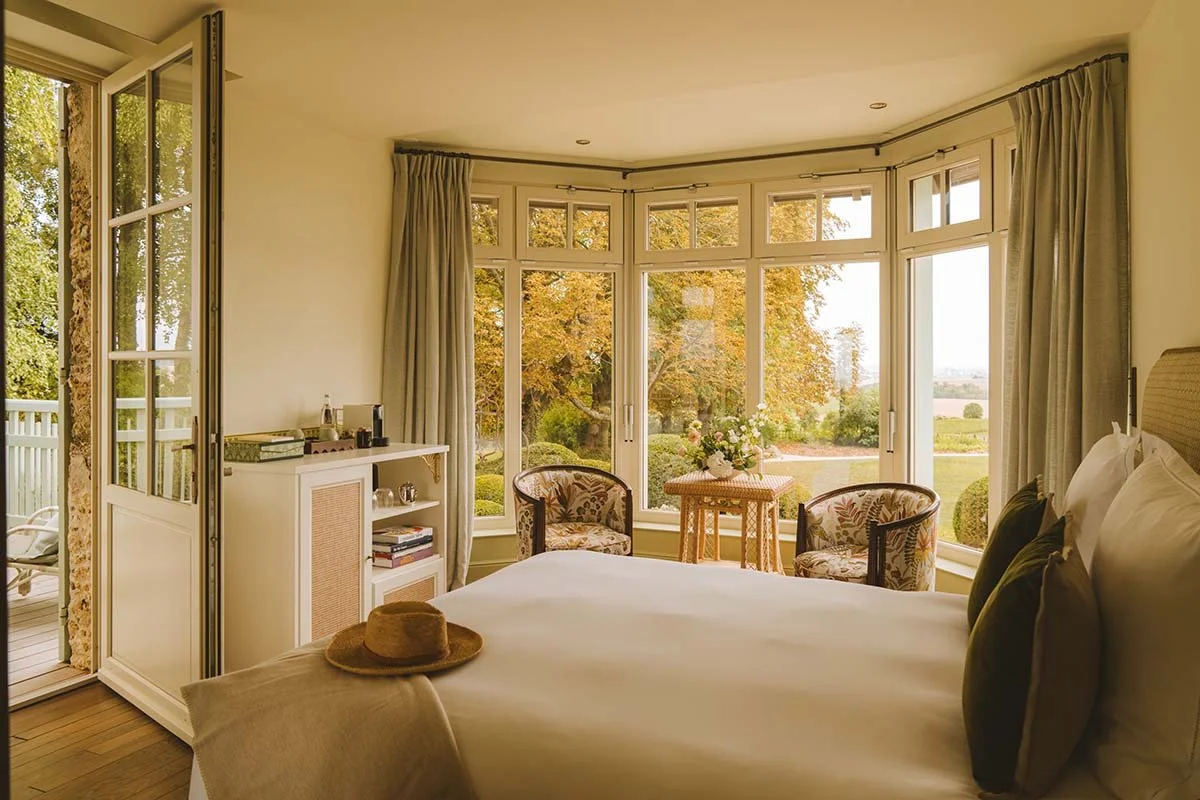
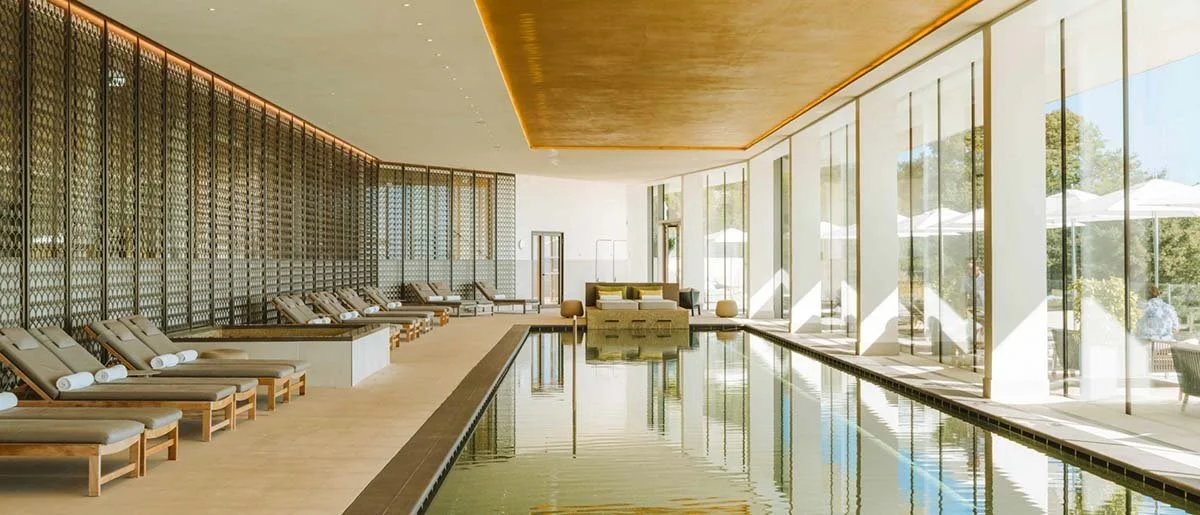
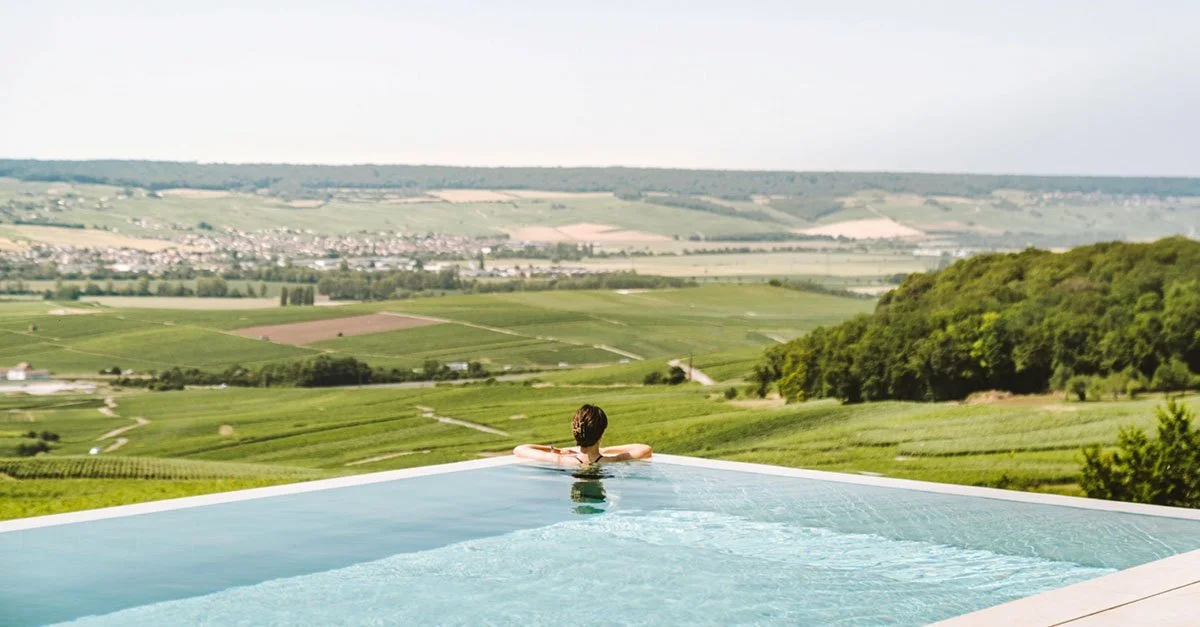
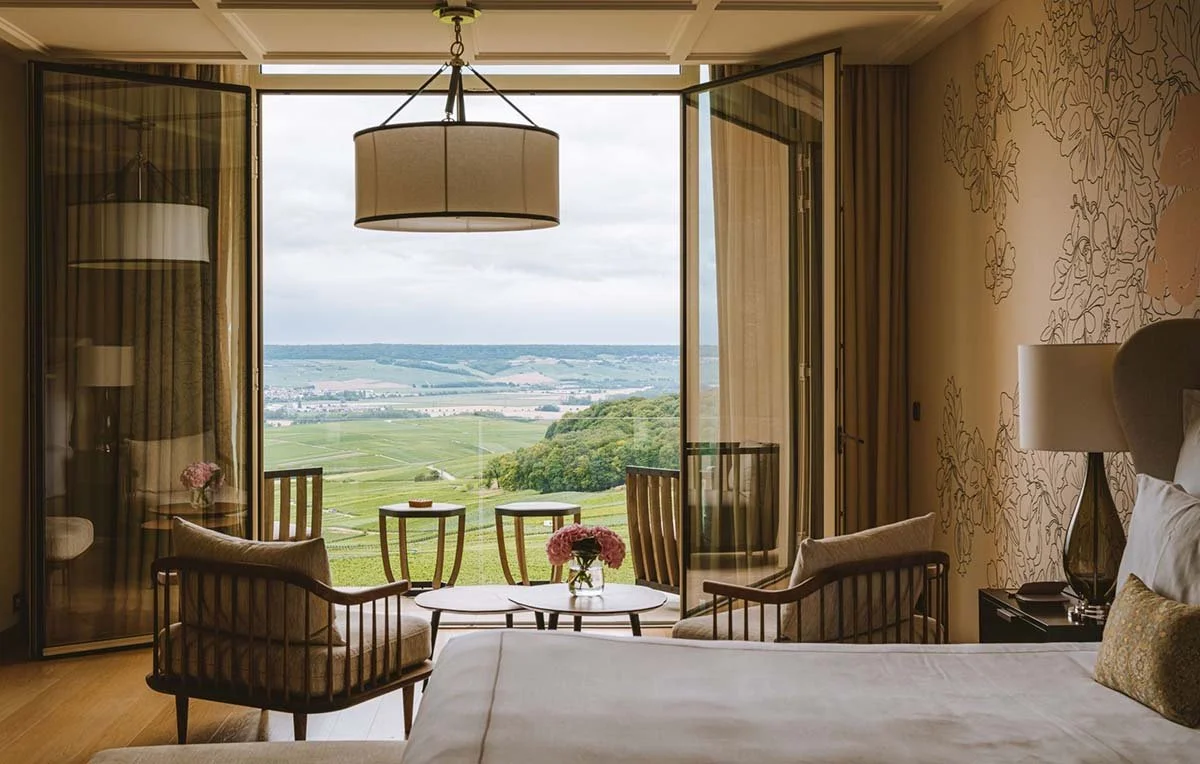
After the boat, the trip has one more gear. Royal Champagne Hotel & Spa sits on the hill above Champillon, rated third best hotel in France by Condé Nast Traveler, with 47 rooms looking out over the vine-striped valley below. The spa is the draw here: indoor and outdoor pools, tailor-made treatments and the particular satisfaction of sitting somewhere very quiet with a view of the region you've just spent a week drinking your way through.
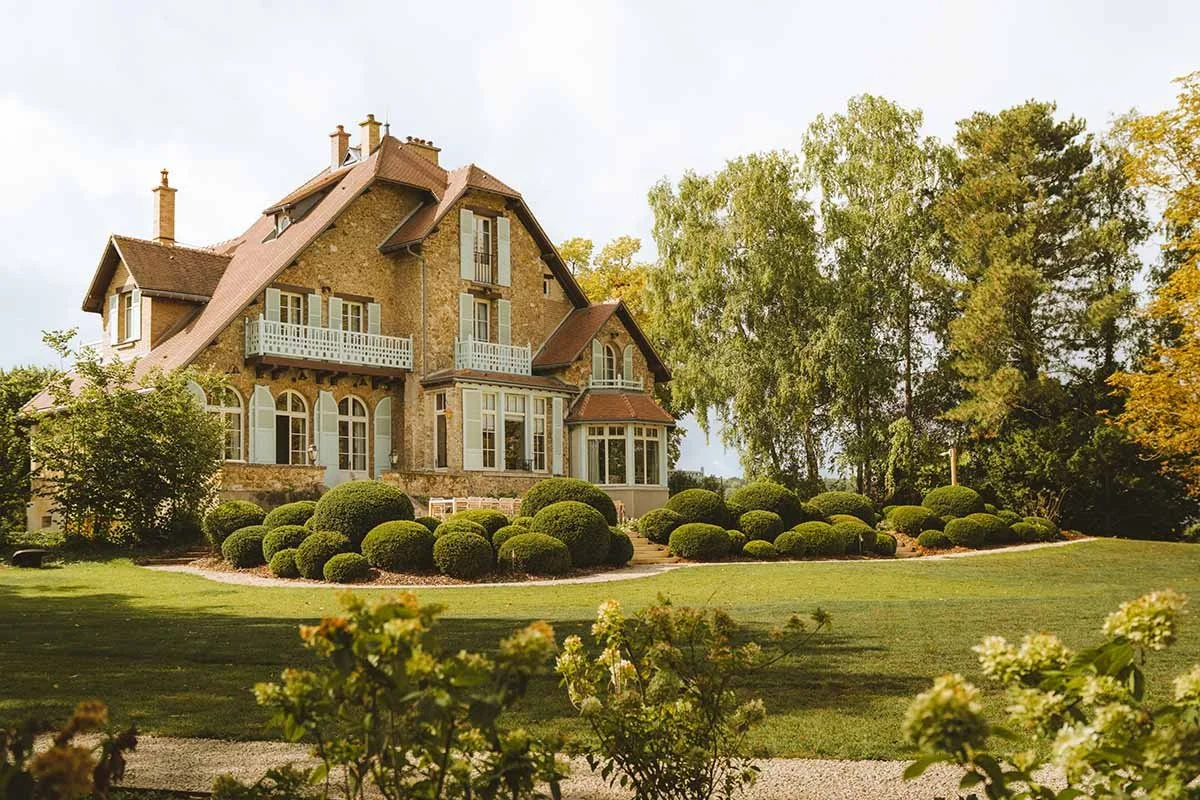
For a more intimate stay, the Villa Les Trois Clochers is an Art Deco residence from 1924, sitting within the hotel's grounds and available as a private rental. Five suites and large living spaces that open directly onto the view, a landscaped garden and a round heated pool at the foot of the vines. A dedicated concierge comes with it, which means the day stays unscheduled without becoming unstructured.
The countryside here fills itself in readily, if you can peel yourself away from the spa. Horseback rides through the vineyards in the morning, a picnic somewhere with a good view at midday, e-bikes for covering more ground in the afternoon without arriving anywhere looking like you've made an effort. Hot air balloon flights over the region run on clear mornings, and the perspective from up there, miles of organized vines stretching toward Reims, is the kind of thing that takes a moment to process. It's a good note to end on.